
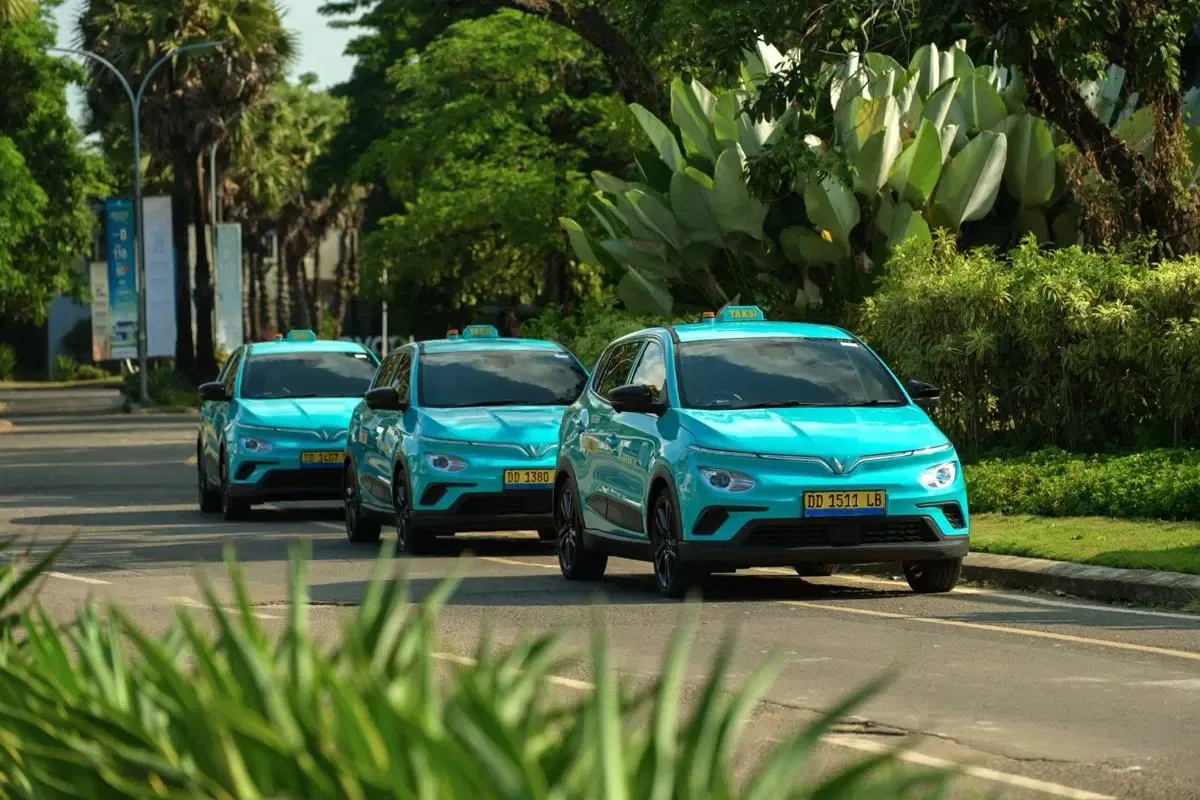

e-taxi-fleet-electric-mobility-green-gsm.webp

Inside the Software That Powers the Next Generation of E-Taxi Ecosystems: A Case Study of Green GSM

Introduction: E-Taxi as a Software-Driven Industry

The mobility industry has entered a profound shift. For decades, transportation was defined by engines, fuel efficiency, and mechanical durability. Today, the real engine of mobility is no longer hardware, it’s software.

Electric-taxi platforms (e-taxis) are one of the clearest examples of this transformation. Their success depends not on the type of EV they use, but on the quality of the digital ecosystem behind them: dispatch algorithms, driver apps, telematics integration, real-time analytics, predictive maintenance, and large-scale backend systems.

And behind every smooth passenger experience lies extensive, high-performance software development work.

This is where Green GSM provides a compelling case study. Operating across multiple Asian regions, Green GSM demonstrates how mobility companies now scale not through hardware, but through software-first strategies.

This article takes you inside the digital architecture behind next-generation e-taxi ecosystems and how Green GSM’s platform represents the future of mobility technology.

Why E-Taxi Platforms Depend on Software (Not Just EV Hardware)

Public narratives about EV adoption tend to focus on battery chemistry or vehicle design. But the actual differentiator of modern e-taxi operators lies in software development, not hardware. E-taxi ecosystems rely on the following core capabilities:

  • Dispatch & Routing Algorithms

Trip assignments require load-balanced decision engines that evaluate distance, route safety, traffic, charging availability, and battery level all in seconds.

  • Real-Time Fleet Visibility

Operators need live dashboards showing speed, location, battery status, trip history, and telematics events.

  • Driver–Passenger Matching

Fairness and efficiency come from rules-based and energy-aware algorithms.

  • Energy-Efficient Route Optimization

Routing must minimize battery stress while maintaining punctuality.

  • Scalable Backend Infrastructure

With thousands of vehicles sending continuous telemetry, systems must handle millions of events with zero downtime.

Without robust software, an e-taxi fleet cannot operate at scale. This is why mobility companies increasingly function like technology companies with software development at their core.

Fleet Management System: The Operational Command Center

A modern e-taxi service lives or dies by its ability to understand what’s happening on the ground every second, across every vehicle. Green GSM’s Fleet Management System (FMS) acts as the operational “command center” where data flows in continuously through embedded IoT telematics. This entire workflow is deeply dependent on robust software development practices that ensure stability and data accuracy.

Each vehicle sends real-time information through secure channels, enabling operators to track battery conditions, driving patterns, GPS movement, and charging status. The system processes these data streams almost instantaneously to avoid delays that could disrupt fleet operations.

Key Data Pipelines:

  • Battery percentage and temperature
  • Vehicle speed and acceleration behavior
  • GPS location and route history
  • Charging and power consumption patterns
  • Odometer and usage statistics

Processing this volume of data requires a low-latency, fault-tolerant backend capable of handling thousands of data points per vehicle per day, an engineering challenge rooted in advanced software development and distributed systems robustness.

Real-Time Alerts & Anomaly Detection

The system automatically notifies fleet managers when issues occur, such as:

  • Sudden battery drops
  • Harsh braking or acceleration
  • Communication loss
  • Hardware tampering
  • Unsafe or unauthorized routes

This layer alone involves heavy software engineering—event processing, rules engines, and risk modeling—to keep operations safe and reliable. It’s an example of how mission-critical mobility services benefit from precise and well-structured software development.

AI-Powered Dispatch & Routing Engine

The dispatch engine is the intelligence core of any ride-hailing platform. In Green GSM, the engine is enhanced with AI models that evaluate multiple variables before assigning a vehicle, all of which require continuous refinement through disciplined software development cycles.

What the AI Considers
1. Demand Prediction:

Machine learning forecasts where passengers will appear, helping operators position vehicles proactively.

2. Load Balancing:

Ensuring fair distribution of ride assignments and preventing idling.

3. Traffic & Energy Constraints:

EVs behave differently from gasoline vehicles; elevation, congestion, and temperature all affect battery usage.

Routing in conventional fleets is straightforward. In e-taxi ecosystems, it becomes a multi-variable optimization problem that requires sophisticated software design and high-level software development expertise to get right.

Predictive Maintenance Platform

EV fleets experience unique wear-and-tear patterns, especially under high-frequency urban usage. Green GSM incorporates a predictive maintenance engine that analyzes key indicators and forecasts potential failures.

The platform monitors:

  • Battery degradation over time
  • Temperature-based risks
  • Motor performance analytics
  • Brake pad and tire wear
  • Automated maintenance scheduling

Predictive models allow the system to prevent downtime instead of reacting to it saving operational costs and increasing vehicle lifespan. These capabilities depend heavily on machine learning pipelines, telematics processing, and reliable software development to ensure long-term accuracy and performance.

Driver & Passenger App Ecosystem

Although the apps look simple, they run on top of complex engineering. Both the driver and passenger apps prioritize speed, clarity, and energy efficiency, which requires thoughtful UI engineering and consistent software development iteration.

They must also run reliably on budget Android devices, which requires careful UI/UX decisions and lightweight architecture. Integrations with local payments, wallets, and QR systems also add layers of backend complexity.

Behind the scenes, this ecosystem relies on microservices, real-time messaging, caching layers, and strict device-level optimization to deliver a seamless user experience, a testament to the importance of scalable software development in mobility solutions.

Case Study: Green GSM’s Digital Architecture

As Green GSM expanded across cities and provinces, scalability became a major engineering challenge. Traffic patterns, terrain, and regulations differ between regions requiring the platform to be adaptive and highly configurable. This adaptability is only possible through modular, future-proof software development practices.

1. Telematics-Driven Decision Making

Every operational decision is powered by data. Examples:

  • Battery status influences dispatch decisions
  • Energy-efficient routes are recommended dynamically
  • Charging needs are predicted before they occur
2. Digitally-Assisted Driving

Drivers receive real-time guidance, including:

  • Optimal speed for battery efficiency
  • Energy-saving routing
  • Pre-trip vehicle health checks
3. Multi-Region Scalability

Green GSM’s architecture uses modular components such as:

  • City-level configuration files
  • Dynamic pricing algorithms
  • Configurable quotas and incentives
  • Local compliance modules

This approach makes the platform adaptable at scale and proves an important principle: E-taxi operations are, above all, a software challenge not a hardware challenge. And solving this challenge requires structured, disciplined software development.

Lessons for Software Development Teams

From Green GSM’s architecture, several key insights emerge for teams building mobility or IoT-based systems:

Domain Knowledge is Essential

Understanding EV behavior, battery dynamics, and mobility patterns is as crucial as writing clean code.

Design for Extreme Reliability

A few seconds of downtime can affect thousands of riders and drivers.

Prepare for Massive Real-Time Data Loads

Telematics systems produce millions of events daily requiring distributed systems, queues, and aggressive caching.

Modularity Enables Rapid Scaling

Microservices simplify expansion, debugging, and region-specific requirements.

Mobility platforms are living systems, they evolve constantly and must be built with flexibility in mind. This reinforces why software development excellence is a strategic necessity, not an optional enhancement.

What This Means for the Future of Mobility Platforms

The architecture behind e-taxi systems like Green GSM is a preview of how cities will manage mobility in the next decade.

Future Mobility-as-a-Service (MaaS) ecosystems will combine:

  • Electric taxis
  • Micro-mobility devices (e-bikes, scooters)
  • Public transportation
  • Logistics and last-mile delivery

To enable this convergence, platforms will need standardized APIs, unified telematics formats, cross-regional pricing engines, and deeply integrated software infrastructures. None of these advancements are possible without continuous investment in software development and scalable engineering. The future of mobility will not be driven by vehicles it will be driven by software.

If your organization is exploring custom software development whether for mobility, enterprise operations, or complex data-driven systems, Meda Technology is ready to support you.

We build scalable platforms, IoT-enabled architectures, and high-performance backend systems designed for long-term reliability and rapid growth.

Let’s discuss how your next digital initiative can be engineered with future-ready, world-class software.

💬Contact Meda Technology to start your consultation

Share: